Inside this guide
Purchase taxes: resale vs new build
The price on the listing is never the price you pay. In Andalusia the biggest single add-on is the purchase tax, and which one applies comes down to one question: is the home a resale, or a brand-new build sold by its developer?
A resale — any home that has been owned before — carries ITP (Impuesto de Transmisiones Patrimoniales, the transfer tax): a flat 7% of the price in Andalusia, unchanged since 2021. A new build bought from the developer is taxed under VAT rules instead: 10% IVA plus 1.2% AJD (Actos Jurídicos Documentados, stamp duty), 11.2% combined. You pay one regime or the other, never both.
| Cost | Resale | New build (from developer) |
|---|---|---|
| Transfer tax — ITP | 7% | — |
| VAT — IVA | — | 10% |
| Stamp duty — AJD | — | 1.2% |
| Independent lawyer | ≈ 1% of price | ≈ 1% of price |
| Notary + Land Registry | ≈ €2.000–3.500 combined (falls as a % as price rises) | ≈ €2.000–3.500 combined (falls as a % as price rises) |
| Purchase-tax deadline | within 30 days of completion (your lawyer files it) | within 30 days of completion (your lawyer files it) |
Andalusia's flat 7% ITP is one of the lowest coastal transfer-tax rates in Spain. Catalonia and Valencia charge 10–11% on a comparable resale, so on a €1.000.000 home the region saves a buyer roughly €30.000–40.000 in tax alone. It is a structural advantage of buying here, not a promotion.
It has not always been this low. Before 2021 Andalusia ran a progressive scale — 8% up to €400.000, 9% from €400.000 to €700.000 and 10% above that — so a €1.000.000 purchase paid €89.000 in ITP. The 2021 move to a flat 7% cut that same bill to €70.000, a €19.000 saving, and stamp duty on new builds fell from 1.5% to 1.2% at the same time (Drumelia, May 2021). Regional budget laws can change these rates, so confirm the current numbers with your lawyer.
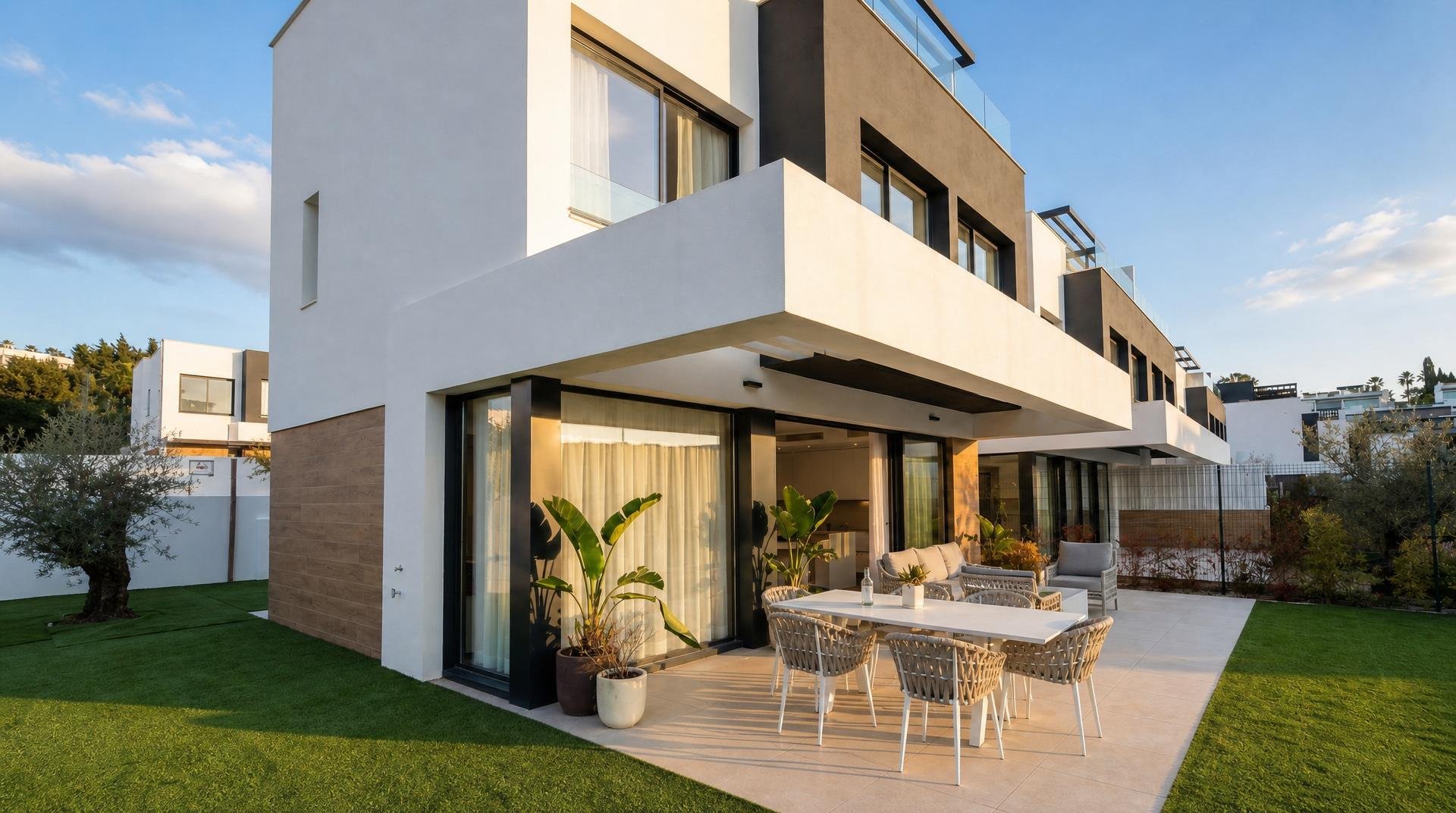 New builds pay 10% VAT + 1.2% AJD instead of 7% ITP.
The 2% investor rate — and what changed in 2026
Andalusia has long offered a reduced 2% ITP instead of 7% on a resale bought to be resold — never a general investor discount, and from 2026 much narrower. This is the detail most buyer guides skip, and it matters if anyone has told you that you can simply buy at 2%.
From 1 January 2026 the 2% regime is significantly tightened (BOJA, Ley 8/2025). To qualify now, the buyer must be a qualifying real-estate professional acquiring with genuine intent to resell; the property must cost no more than €500.000, counting annexes such as garages and storerooms, measured on the higher of the agreed price or the cadastral reference value; the resale must complete within two years; and the incentive must be stated explicitly in the purchase deed. Miss any one condition and the full 7% applies. If you think this could apply to you, confirm eligibility with a tax lawyer before you sign.
The older version still circulating online — a five-year resale window, open to any investor — is the pre-2026 rule, now out of date (Drumelia, September 2025). For almost every private buyer of a home to live in or let, the rate is the standard 7%; if your activity might qualify, model it with an adviser rather than assume it.
Professional fees: lawyer, notary, registry
On top of the tax you pay the people who make the purchase safe and legal — modest against the price, and smaller in percentage terms the higher you go.
Independent lawyer — around 1% of the price. "Independent" means not the seller's and not the developer's lawyer. They verify title, debts, charges and planning status, hold your deposit to conditions, and can complete for you under power of attorney. A lawyer is not legally mandatory, but skipping one is the classic expensive mistake.
Notary and Land Registry — roughly €2.000–3.500 combined on a typical prime purchase, or about 0.5% of price the way some firms express it (Drumelia, September 2025). Both are regressive: on a large purchase they fall well under 0.5%. The notary formalises the deed; the registry records you as the new owner.
Bank draft or transfer at completion. A small but real line — high-value deals settle by banker's draft, and the fee to issue it is booked separately (Drumelia's €10.000.000 example carries €2.000 for it).
One cost you should not pay is a buyer's agency fee: on the Costa del Sol the seller pays the agency commission in nearly every transaction, so unless you have explicitly engaged a buyer's agent, it is not yours. Nor is there a separate "gestoría" or filing fee as standard here — administrative filing is folded into the lawyer's work.
 The advertised price is the smaller half of the arithmetic.
If you're financing: mortgage costs
Most prime purchases here are cash — fewer than 10% of purchases above €2.000.000 are financed (notarial data via Panorama, April 2026), part of why the top of the market barely reacts to rate moves. If you do take a Spanish mortgage, the extra costs are smaller than expected.
Bank valuation (tasación) — about €300–600 on a typical home, more on ultra-prime (Drumelia quotes up to €4.000 on its €10.000.000 example). It is essentially the only unavoidable extra cost of getting the loan, because since 2019 the lender pays most of the mortgage set-up taxes.
Loan-to-value for non-residents runs roughly 50–70%, depending on the bank and your profile (Drumelia cites around 50%, Benalto's own guidance 60–70%). The loan is calculated on the lower of the price or the bank valuation, so a cautious valuation reduces what you can borrow. Non-resident rates sat near 3.3% in 2025 (Drumelia); they move, so get a current quote.
Home insurance becomes mandatory the moment you have a mortgage, and the bank attends the notary so that the purchase deed and the mortgage deed are signed in the same session.
Budget three to five weeks for valuation and approval before your notary date; the full financing walk-through is in the buying guide.
Worked examples: what it really adds up to
Put the pieces together and a resale lands around 8.5–13% over the price all-in, a new build around 12–13% — the band mostly reflects whether you count the lawyer, the top of the notary and registry range, and a contingency (Drumelia 8.5–9% resale; Benalto 10–13%; Bromley 10–12% resale, 12–14% new). The table works a resale at three price points; fixed fees make the percentage fall as the price climbs.
| Resale price | ITP (7%) | Lawyer + notary/registry | All-in | Over price |
|---|---|---|---|---|
| €750.000 | €52.500 | ≈ €10.300 | ≈ €813.000 | +8.4% |
| €2.000.000 | €140.000 | ≈ €23.500 | ≈ €2.163.500 | +8.2% |
| €5.000.000 | €350.000 | ≈ €53.500 | ≈ €5.403.500 | +8.1% |
The €750.000 line is Benalto's worked figures (ITP €52.500, notary and registry ≈ €2.800, lawyer €7.500); the €2.000.000 and €5.000.000 lines apply the same rates as an illustration, so treat them as a guide, not a quote.
Switch that €750.000 home to a new build and the tax line jumps: 10% IVA + 1.2% AJD is €84.000 instead of €52.500 ITP, taking the all-in to about €844.500, or +12.6%. At the very top the professional fees almost disappear as a share. On a €10.000.000 new build from a developer, Drumelia itemises €1.000.000 VAT + €120.000 AJD, an €80.000 lawyer, €8.000 notary, €4.000 registry and a €2.000 transfer fee — professional fees of roughly 0.9% of price, against about 1.4% on the €750.000 home.
Try your own price in the cost calculator directly below; it applies these same rates in seconds.
Currency: the cost nobody itemises
If your money is in pounds, dollars or francs, the exchange is a real cost that appears on no breakdown — and one of the few you can actually shave. Moving the purchase price through a high-street bank typically costs 1–3% of the price in spread. A specialist FX broker prices closer to the interbank rate and can sell you a forward contract that locks today's rate between your deposit and completion. On a €750.000 purchase, 1–3% is €7.500–22.500 — real money, and worth protecting across the weeks or months between reservation and the notary.
For sterling buyers the currency has cut both ways, but prime capital growth here has tended to outrun the exchange friction over a five-to-seven-year hold (Bromley, May 2026).
 A calculator sits next to an open property brochure on a desk, no numbers filled in yet.
Ongoing ownership costs (yearly)
Once you own, a handful of annual costs follow. They are generally modest next to a comparable home in London or Paris, but they vary widely by property type and community.
IBI (Impuesto sobre Bienes Inmuebles) — the annual municipal property tax, set on the cadastral value. Expect a few hundred euros to a few thousand — a typical €400–3.000+ depending on the home. Every Benalto listing shows its IBI where available.
Basura — the local refuse charge, billed alongside IBI by the town hall.
Community fees — in a gated resort with pools, gym, gardens and security these run roughly €100–600+ per month. A small townhouse community sits at the low end; a full-service branded resort with concierge and spa at the high end.
Utilities and insurance — about €150–350 per month for a typical villa, more for a large home run year-round with a pool and climate control. Insurance is compulsory only with a mortgage, but sensible either way.
These bands are broad by design — an apartment and a 1.000 m² villa live in different worlds — so each listing carries its own figures where we have them; compare them against our area guides.
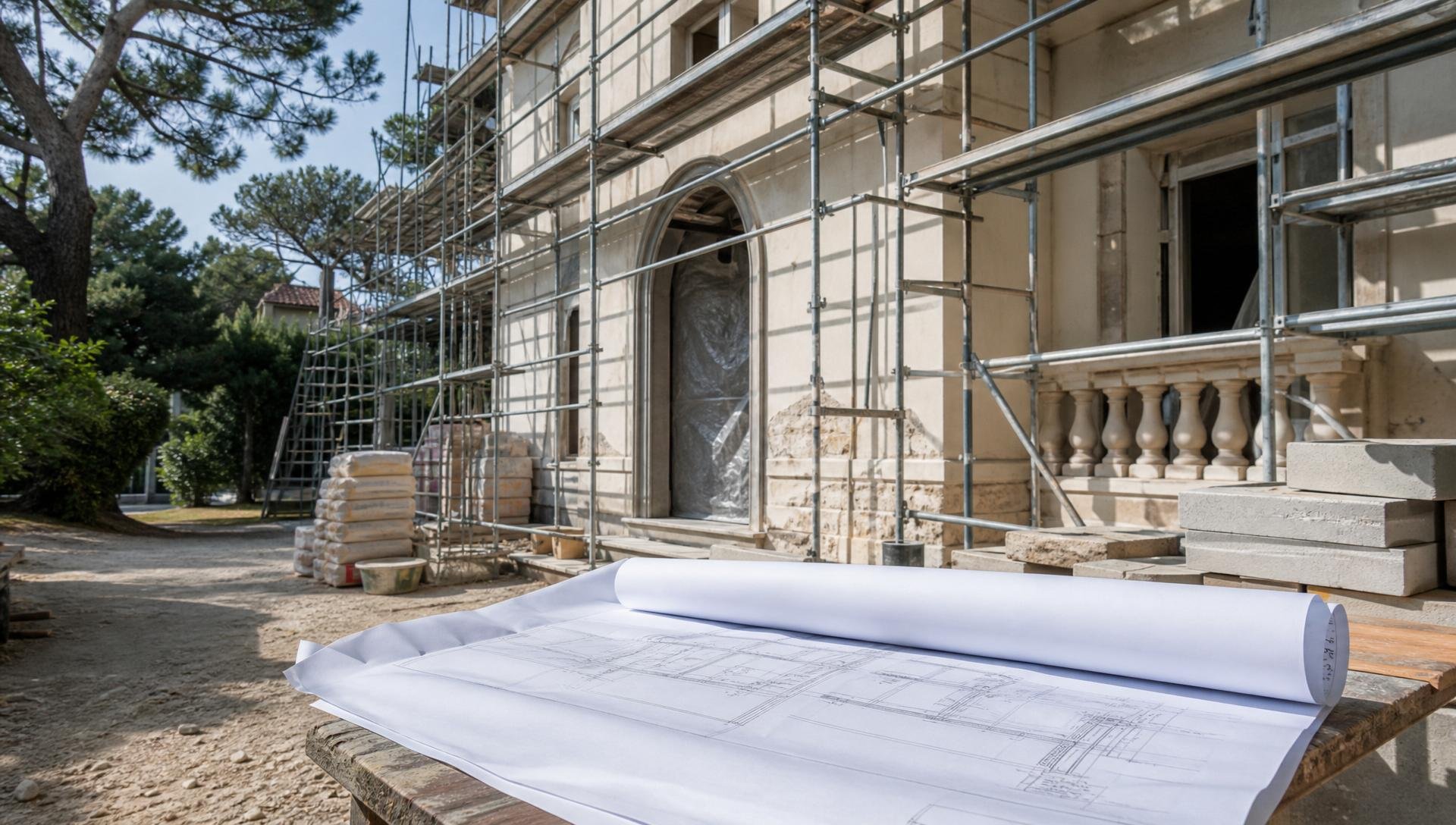 Renovation changes the tax arithmetic as much as it changes the house.
Non-resident taxes: IRNR and rental income
If you own here but are not tax-resident in Spain, you file the IRNR (Impuesto sobre la Renta de no Residentes) each year on Modelo 210. The part that surprises people: even if you never rent the home out, Spain charges an imputed income tax, a small notional income on the property itself. It is modest, but it is annual and it is not optional.
Rent the home out and rental income is taxed instead: 19% on net income for EU/EEA residents, and 24% on gross income, with no deductions, for everyone else. Andalusian holiday lets also need a VUT tourist licence, registered before you advertise, and not every community permits short lets — so check before you buy if yield matters. Gross short-let yields run 5–7% in tourist-heavy postcodes, but after management (typically 20–25% of gross), tax, IBI, community fees, insurance and realistic voids, a luxury rental nets closer to 3–4.5% (Bromley, May 2026). The licence and community rules are covered in the FAQ.
Spending 183 days or more in Spain in a year makes you tax-resident, bringing your worldwide income and assets into scope; many international owners deliberately stay under that line.
Wealth tax and the top end
Most buyers never touch wealth tax. Above a certain net worth it becomes a real planning question — one to raise with an adviser early.
Spain levies a wealth tax (Impuesto sobre el Patrimonio), and alongside it a national Solidarity Tax (Impuesto Temporal de Solidaridad de las Grandes Fortunas) on net assets above roughly €3.7 million per person, after allowances. The two interact at the top of the market, so anyone in that bracket should model the combined position rather than reason from one tax alone. Two points from the sources are worth holding onto: mortgage or debt secured directly on the property reduces the taxable base, and Andalusia is comparatively favourable on inheritance and gift tax for close relatives (Drumelia, September 2025).
If your net assets are anywhere near €3.7 million, bring a tax adviser into the conversation from the first valuation. Getting the structure right — ownership, financing, residency — is far cheaper before you buy than to unwind afterwards. Ben can point you to specialists; the numbers themselves belong with a qualified tax lawyer.
Budget the exit on the way in
The cost of selling is easy to ignore while buying, but smaller and more predictable if you plan for it now. When you eventually sell:
Capital gains tax — 19% for non-residents on the profit, calculated as your net sale proceeds minus the total you paid to acquire (price, taxes and notary, plus documented improvements — so keep every invoice).
3% retention. When a non-resident sells, the buyer withholds 3% of the sale price and pays it to the tax office against your CGT. It is a retention, not an extra tax: if you owe less, you file to recover the balance.
Plusvalía municipal — a local tax on the increase in the land's cadastral value over the years you owned it. Usually not a large sum, but it is the seller's to pay.
Agency fee and energy certificate. The selling commission (typically 4–5% + VAT) is the seller's, and an energy performance certificate runs about €100–300. A 2026 reform (in force 23 July 2026) cut the validity of a G-rated certificate from ten years to five, so a poor rating needs renewing sooner (Idealista, July 2026).
The full seller's playbook — pricing off closed comparables rather than asking prices, the document pack, the timeline — is in the selling guide. For what homes are actually closing at, not just listing at, see the market report: Marbella's closed/notarial average reached €4.864/m² in Q1 2026 (Notaries' data via Knight Frank, reported July 2026), still well below the roughly €5.500/m² owners were asking on the portals in late 2025 (Idealista). Knowing the real number is the whole point, and it is where every Benalto listing starts.
This guide reflects Andalusian rates and rules current as of July 2026. Tax law changes, and the figures that matter most to your purchase should be confirmed with your own lawyer or tax adviser.